SAFE vs Convertible Note: What They Are and Which to Use
Convertible notes vs. SAFEs: how each works, key differences in terms and mechanics, and which instrument makes more sense for your early-stage startup funding.


Page 8
Convertible notes vs. SAFEs: how each works, key differences in terms and mechanics, and which instrument makes more sense for your early-stage startup funding.
A Section 1045 exchange (QSBS rollover) can defer gain if you buy replacement QSBS within 60 days. Eligibility checklist, timeline, and worked example.
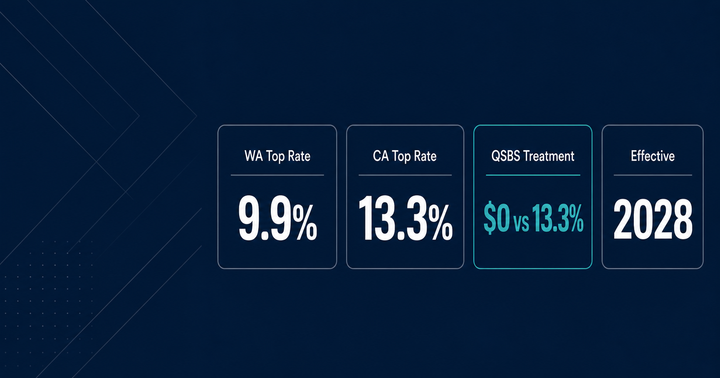
Washington vs. California tax comparison for founders and investors: income tax, capital gains, QSBS treatment, and why Washington's 2028 tax changes the calculus.
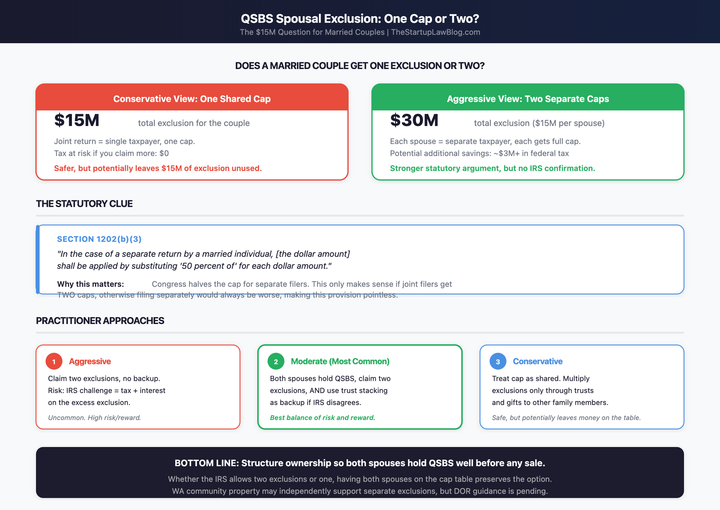
QSBS for married couples: joint versus separate returns, coordinated dollar limits, the 10-times-basis alternative, and why gifts do not establish two full exclusions.
How to evaluate and negotiate employee equity at a startup—percentage on a stated capitalization, strike and vesting, ISO vs. NSO, refresh grants, and common mistakes.
How double-trigger acceleration works, how it differs from single-trigger vesting, and what to check before an acquisition—with worked examples.
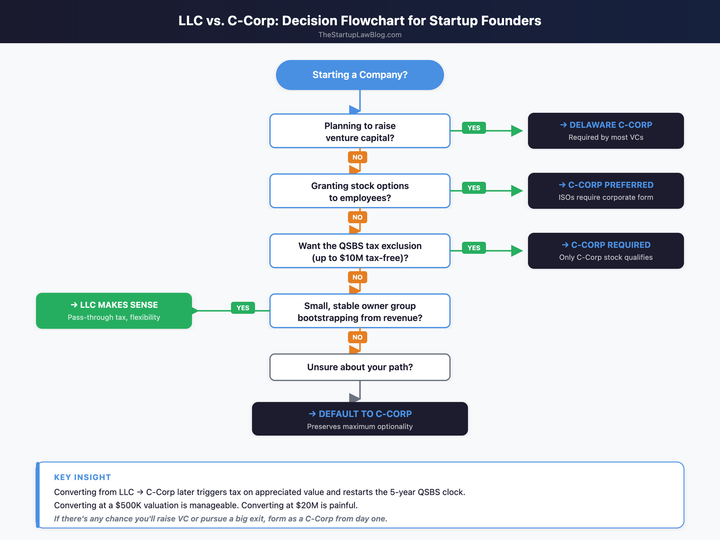
LLC vs. C-Corp for startups: key differences in taxes, QSBS eligibility, investor expectations, and how to choose the right entity for your company.
Complete guide to priced equity rounds for founders: Series Seed through Series A, key terms, valuation mechanics, and what to expect from institutional investors.
A living reference of 75+ startup law terms every founder should know — from 83(b) elections to QSBS, Reg D to vesting schedules, explained in plain English.
Accredited investor requirements for startups: income test $200k/$300k, net worth $1M (excluding your home), and SEC-approved credentials. Includes verification steps under Reg D (506(b)/(c)).