

Joe Wallin
Oregon QSBS Decoupling Is Law: What Kotek's Signing Letter — and the Referendum — Mean for Founders
Governor Kotek signed SB 1507 on April 9, 2026. Her signing letter committed the Prosperity Council to propose corrective QSBS legislation in 2027 — and a Republican-led referendum campaign is running in parallel. Here is what both paths do and don't mean for Oregon founders.
How to Leave Washington Before the Income Tax Hits: The Domicile Strategy Guide
ESSB 6346 begins Jan 1, 2028. Leaving Washington to avoid the 9.9% income tax hinges on domicile—this guide covers proof and audit triggers.
Domicile vs. Residency: The Legal Distinction That Controls Your Washington Tax Bill
High-earners planning to leave Washington before ESSB 6346 kicks in routinely confuse residency with domicile. The distinction is centuries old, and after 2028 it will determine whether you pay a 9.9% state income tax.
The 183-Day Rule and Safe-Harbor Day-Counting for Washington Taxpayers
The 183-day rule sounds simple — spend less than 183 days in a state and you're safe. In practice, day-counting is where residency audits are won and lost. Here is how it actually works and what your log needs to show.
Where to Go: Texas, Nevada, Florida, Wyoming, and Tennessee Compared for Washington Expatriates
If ESSB 6346 is pushing you out of Washington, the next question is where to land. Each of the five leading no-income-tax destinations has a different trade-off on estate tax, asset protection, climate, and practical West Coast access.
Trust Planning for Washington High Earners: ING, NING, and DING Trusts Under ESSB 6346
Non-grantor trusts sitused outside Washington can shift investment income out of a high earner's AGI and away from the 9.9% tax. Here's how the INGs, NINGs, and DINGs actually work — and where they don't.
QSBS and Washington Residency: Timing Section 1202, the Sale, and the Move
For Washington founders, the interaction between Section 1202, Washington's capital gains tax, and ESSB 6346 is the single most important planning analysis of the pre-2028 window. Here is how to sequence it.
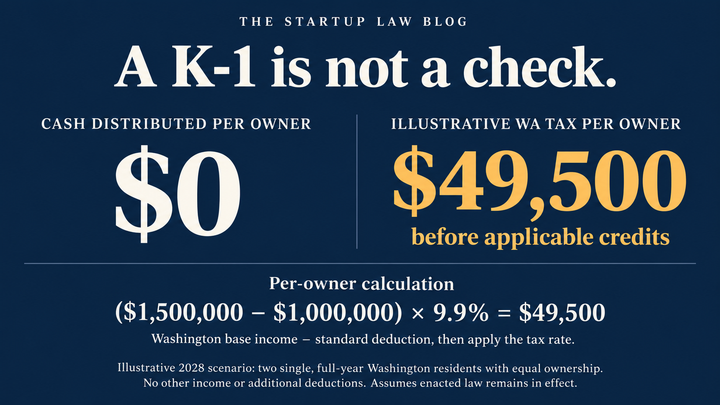
The Marriage Penalty in ESSB 6346: Why Two Unmarried Washington Earners Can Save $40,000 a Year
ESSB 6346's $1 million threshold is per household, not per person. A married couple earning $700K each pays a five-figure state tax bill. Two unmarried individuals with the same income pay zero. Here's the math — and the planning.