Washington’s 9.9% Income Tax & QSBS: Timing Section 1202, Your Sale, and Your Move
Coordinate QSBS eligibility, Washington’s 7%–9.9% capital-gains tax, and income-tax residency and sourcing rules before a sale or move.


Page 3
Coordinate QSBS eligibility, Washington’s 7%–9.9% capital-gains tax, and income-tax residency and sourcing rules before a sale or move.
Washington’s 9.9% income tax (ESSB 6346) gives spouses one $1 million standard deduction between them, not one each. That creates a marriage penalty: two unmarried high earners can avoid tax while a married couple pays a five-figure bill. Here’s the math—and planning ideas.
Compare option exercise costs, ISO AMT, NSO compensation, contractual deadlines, QSBS holding periods and Washington taxes before committing cash.
How ISO exercises affect federal AMT, the 2026 exemption phaseout, credit recovery, QSBS holding periods and Washington exercise-versus-sale tax planning.
A Section 1045 exchange (QSBS rollover) can defer gain if you buy replacement QSBS within 60 days. Eligibility checklist, timeline, and worked example.
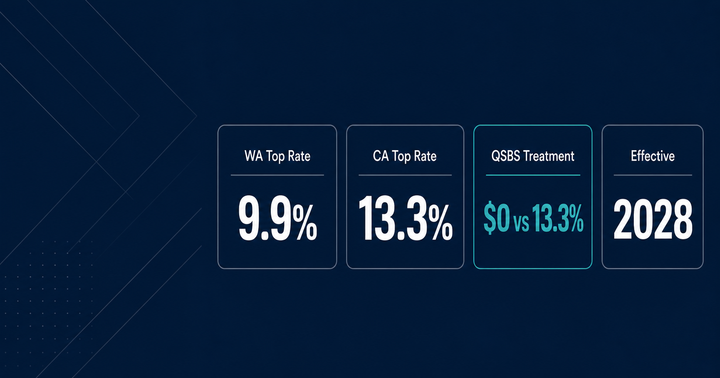
Washington vs. California tax comparison for founders and investors: income tax, capital gains, QSBS treatment, and why Washington's 2028 tax changes the calculus.
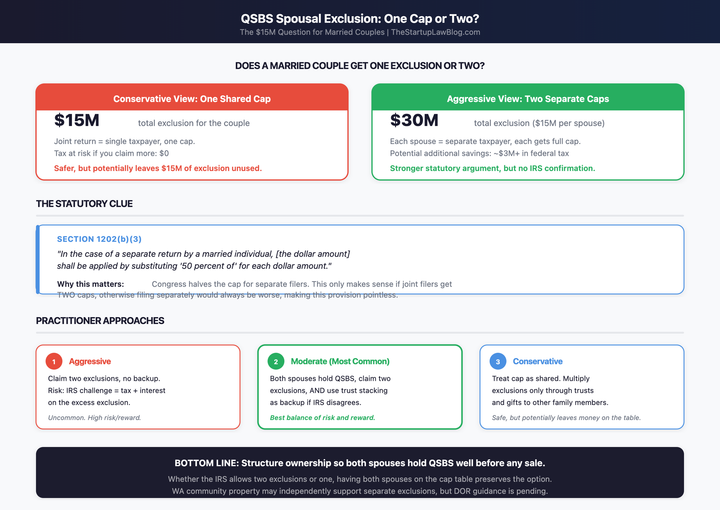
QSBS for married couples: joint versus separate returns, coordinated dollar limits, the 10-times-basis alternative, and why gifts do not establish two full exclusions.
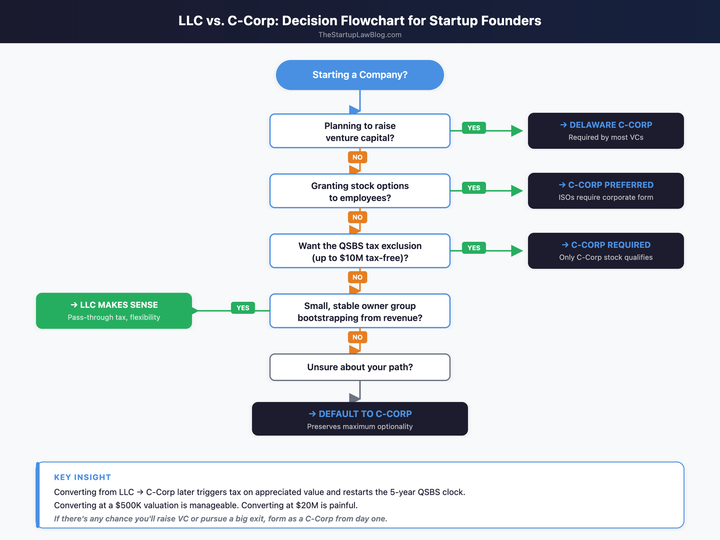
LLC vs. C-Corp for startups: key differences in taxes, QSBS eligibility, investor expectations, and how to choose the right entity for your company.
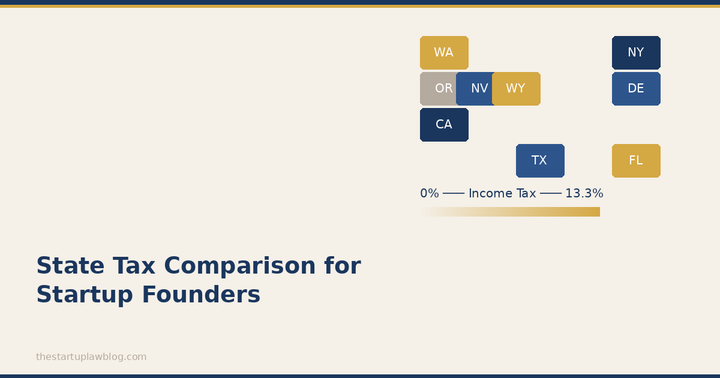
A comprehensive guide comparing income tax, capital gains, QSBS conformity, and estate tax across 11 states — plus scenario analysis and planning strategies for startup founders approaching an exit.
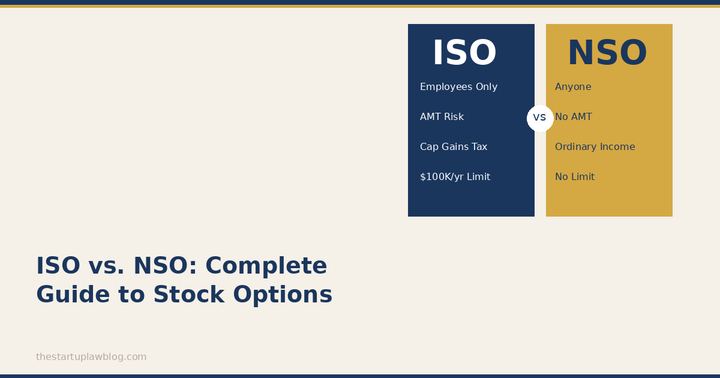
ISOs and NSOs have fundamentally different tax treatment. Understanding those differences — including the AMT trap, the $100K limit, and post-termination rules — is essential for founders and employees.