Trust Planning for Washington Residents: What to Evaluate
Washington trust planning: ING addbacks, completed gifts, federal ownership, distributions, asset transfers and the costs to compare.



Page 3
Washington trust planning: ING addbacks, completed gifts, federal ownership, distributions, asset transfers and the costs to compare.
Coordinate QSBS eligibility, Washington’s 7%–9.9% capital-gains tax, and income-tax residency and sourcing rules before a sale or move.
Washington’s 9.9% income tax (ESSB 6346) gives spouses one $1 million standard deduction between them, not one each. That creates a marriage penalty: two unmarried high earners can avoid tax while a married couple pays a five-figure bill. Here’s the math—and planning ideas.
Washington’s capital gains tax charitable deduction has a hidden limitation. Not all charities qualify—here’s what founders and high earners need to know.
Compare option exercise costs, ISO AMT, NSO compensation, contractual deadlines, QSBS holding periods and Washington taxes before committing cash.
How ISO exercises affect federal AMT, the 2026 exemption phaseout, credit recovery, QSBS holding periods and Washington exercise-versus-sale tax planning.
Washington's capital gains tax and new income tax create layered obligations for RSU holders. Here's how the taxes apply, where the traps are, and what Seattle tech employees can do about it.
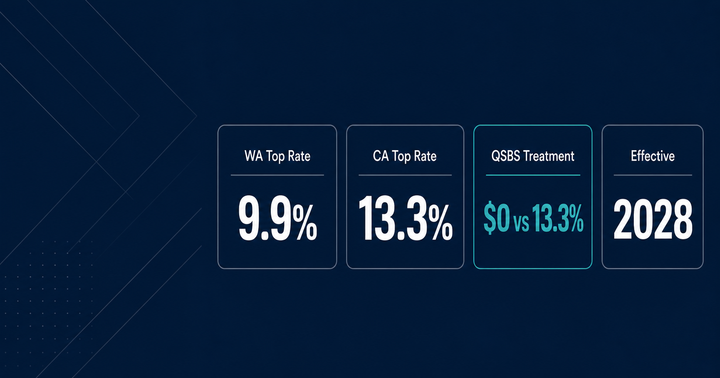
Washington vs. California tax comparison for founders and investors: income tax, capital gains, QSBS treatment, and why Washington's 2028 tax changes the calculus.
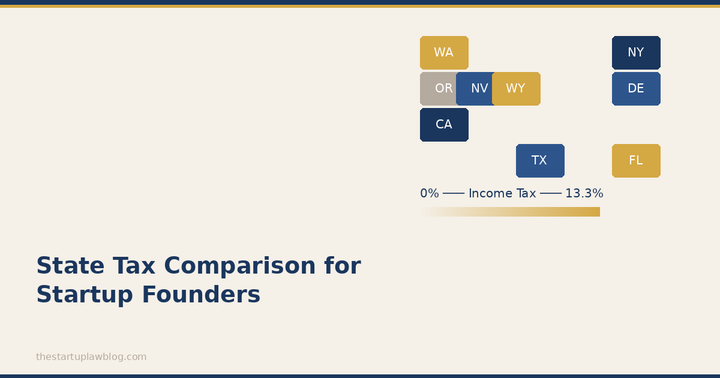
A comprehensive guide comparing income tax, capital gains, QSBS conformity, and estate tax across 11 states — plus scenario analysis and planning strategies for startup founders approaching an exit.
Before exercising options ahead of Washington’s 2028 income tax, compare NSO income, ISO AMT, QSBS holding periods, liquidity and the applicable deductions.