QSBS Records Washington Founders Should Keep
Company and shareholder records that support Section 1202 eligibility: formation, issuances, gross assets, active business, redemptions, and holder-level history.


Stock options and equity compensation basics for startup founders and employees, including taxation and vesting.
Company and shareholder records that support Section 1202 eligibility: formation, issuances, gross assets, active business, redemptions, and holder-level history.
Compare option exercise costs, ISO AMT, NSO compensation, contractual deadlines, QSBS holding periods and Washington taxes before committing cash.
How ISO exercises affect federal AMT, the 2026 exemption phaseout, credit recovery, QSBS holding periods and Washington exercise-versus-sale tax planning.
Washington's capital gains tax and new income tax create layered obligations for RSU holders. Here's how the taxes apply, where the traps are, and what Seattle tech employees can do about it.
How to evaluate and negotiate employee equity at a startup—percentage on a stated capitalization, strike and vesting, ISO vs. NSO, refresh grants, and common mistakes.
How double-trigger acceleration works, how it differs from single-trigger vesting, and what to check before an acquisition—with worked examples.
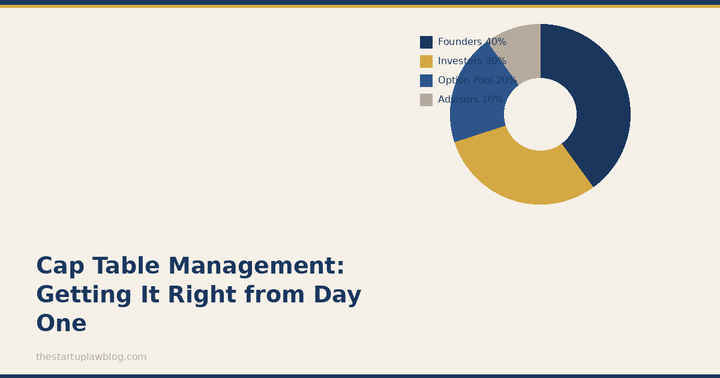
Keep your cap table aligned with legal equity records: approvals, documents, stock ledger, SAFEs/options/notes, and financing readiness — not software shopping.
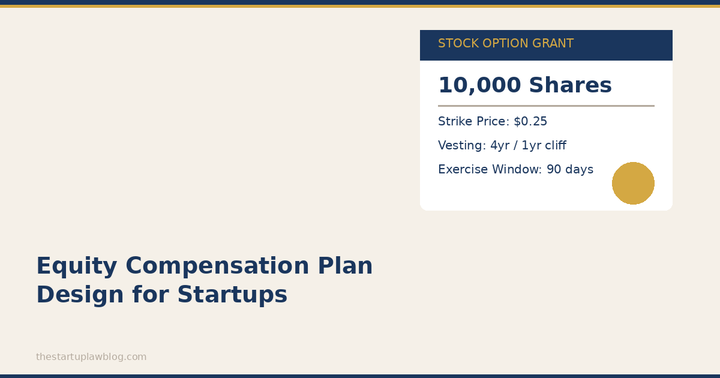
Your equity compensation plan is one of the most important documents your startup will create. Here's how to structure it correctly — from pool sizing to vesting schedules to change of control provisions.
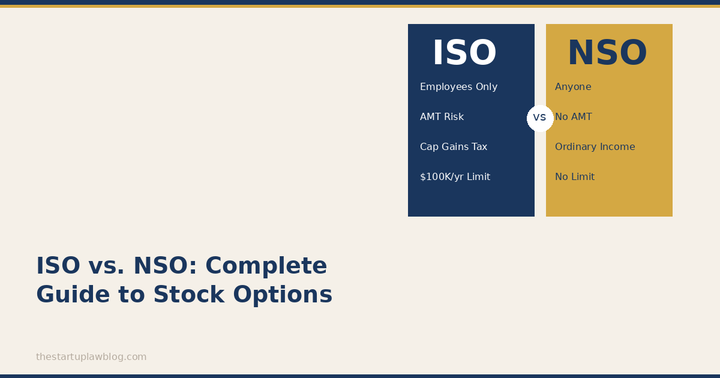
ISOs and NSOs have fundamentally different tax treatment. Understanding those differences — including the AMT trap, the $100K limit, and post-termination rules — is essential for founders and employees.
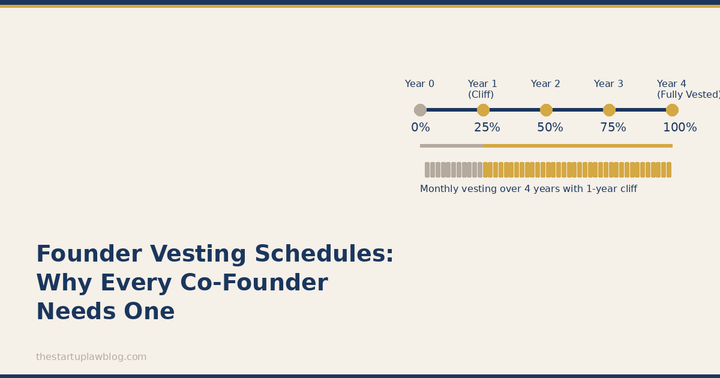
Founder vesting explained: four years with a one-year cliff, ownership versus vesting, repurchase terms, 83(b) elections, and what happens at departure or acquisition.