Section 1045 vs. Section 1202: Two QSBS Strategies Every Founder Needs to Understand
Section 1045 vs. Section 1202: two complementary QSBS strategies for founders and investors — when to use each, and how to combine them for maximum tax benefit.
Page 5
Section 1045 vs. Section 1202: two complementary QSBS strategies for founders and investors — when to use each, and how to combine them for maximum tax benefit.
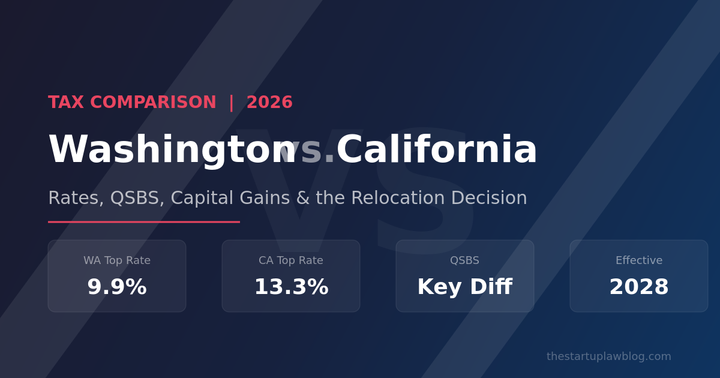
Washington vs. California tax comparison for founders and investors: income tax, capital gains, QSBS treatment, and why Washington's 2028 tax changes the calculus.
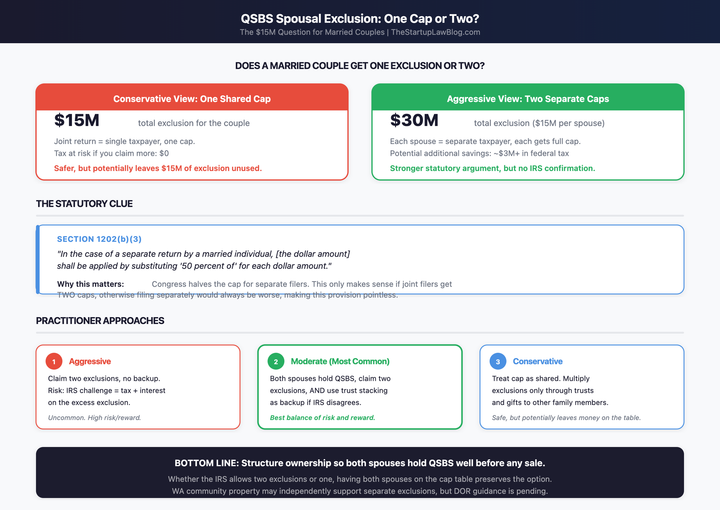
The Section 1202 QSBS exclusion can shelter up to $15 million in capital gains from federal tax. But does a married couple get one exclusion — or two? The answer matters more than ever after the One Big Beautiful Bill Act.
How to negotiate startup equity as an employee: understanding your offer, asking the right questions, evaluating strike price and vesting, and avoiding common mistakes.
Double-trigger acceleration explained: what it is, how it works, when it applies, and why founders and key employees should insist on it in their equity agreements.
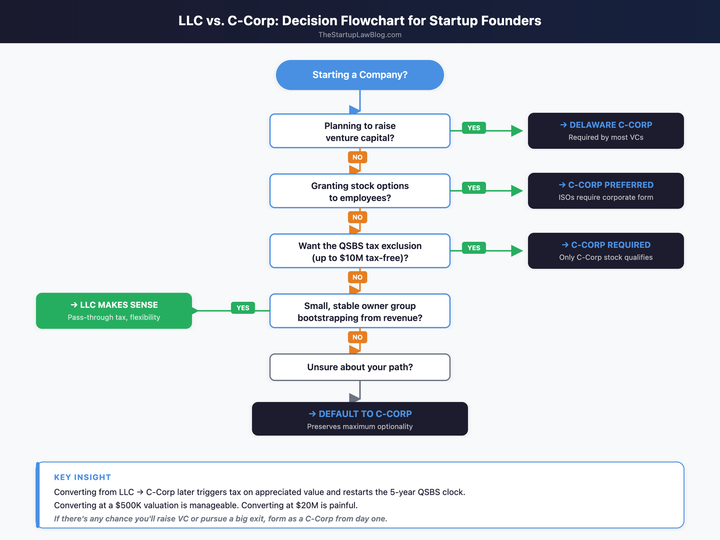
LLC vs. C-Corp for startups: key differences in taxes, QSBS eligibility, investor expectations, and how to choose the right entity for your company.
Complete guide to priced equity rounds for founders: Series Seed through Series A, key terms, valuation mechanics, and what to expect from institutional investors.
A living reference of 75+ startup law terms every founder should know — from 83(b) elections to QSBS, Reg D to vesting schedules, explained in plain English.
Accredited investor requirements for startups: income test $200k/$300k, net worth $1M (excluding your home), and SEC-approved credentials. Includes verification steps under Reg D (506(b)/(c)).
A practical comparison of the two most important Reg D exemptions — Rule 506(b) and 506(c). When to use each, how investor verification works, and how to avoid costly mistakes.