
2025 Corporate & Tax Law Updates: OBBBA, CTA Rollback, and the Demise of Chevron Deference
The startup world moves fast, but so does the legal landscape. 2025 has brought three major legal developments that directly impact how founders think about equity, regulatory compliance, and the interpretation of securities and tax law. Whether you're planning your first SAFE, structuring employee stock options, or positioning your company for growth, understanding these changes is essential.
The One Big Beautiful Bill Act (OBBBA) and QSBS: What Changed
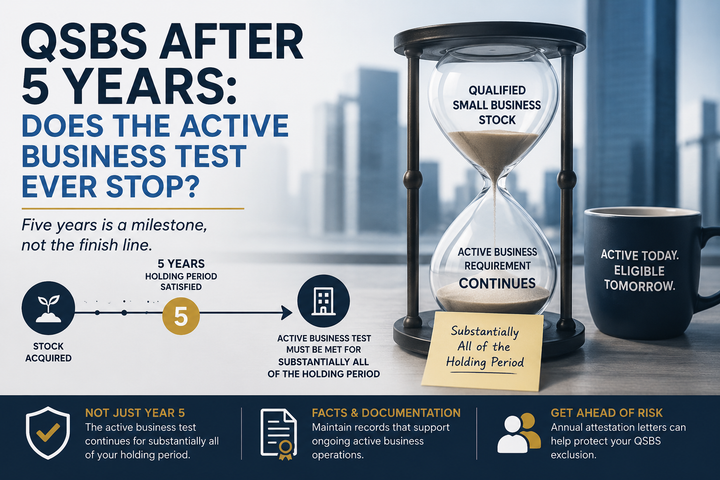
The One Big Beautiful Bill Act represents a significant permanent expansion of Qualified Small Business Stock (QSBS), one of the most valuable tax breaks available to startup founders and early investors. For years, QSBS operated under temporary extensions. Now, it's permanent—and better than ever.
Here's what changed: The old QSBS rules offered a 50% exclusion on capital gains for stock held longer than five years, subject to various limits. The 2025 law makes the exclusion 100% permanent. That means if you invest $100,000 in a qualifying startup and hold for five years, your gains could be entirely tax-free at the federal level (though state taxes may apply). This is transformational wealth-building math.
The dollar limits also expanded. Previously, the limit on tax-free gains was $10 million per taxpayer per issuer. The OBBBA increased this cap to $15 million for stock acquired after enactment. Under OBBBA, this threshold increased significantly, and the lookback period used to determine whether an issuer qualifies was adjusted in favor of founders. Additionally, the definition of "active business" was clarified to encompass more technology and service businesses—important for founders whose revenue models didn't cleanly fit prior guidance.
For founders, the practical impact is substantial. If you structure equity compensation correctly and hold for the required period, you can build generational wealth without federal capital gains tax. For investors, the math changes on deal economics: better tax outcomes make slightly lower cash returns more attractive, which shifts negotiating leverage on valuation and exit terms.
One critical caveat: QSBS benefits only apply to stock purchased directly from the company (not secondary sales), and the company must meet size and business requirements at the time of purchase and when gains are recognized. You cannot cure these defects retroactively. That's why working with a tax advisor early—before taking investment or hiring key employees—is non-negotiable.
CTA Rollback: What Happened to Beneficial Ownership Reporting
The Corporate Transparency Act (CTA), enacted in 2021, was supposed to fight money laundering and beneficial ownership concealment by requiring millions of small businesses to file detailed ownership information with FinCEN (the Financial Crimes Enforcement Network). The reporting threshold was low: any business with fewer than 20 employees and less than $5 million in gross revenue had to file.
In early 2025, enforcement of this requirement was stayed by federal court injunction. While the practical effect is that companies do not currently need to file, the injunction could be reversed on appeal — this is a judicial stay, not a legislative repeal. The repeal was driven by concerns about compliance burden on small business owners, privacy risks of centralizing sensitive ownership data, and constitutional questions about the government's authority to mandate such reporting.
What does this mean for startups? If you haven't already filed a Beneficial Ownership Information report, you likely don't need to now. If you did file, you're not required to refile. The government's FinCEN portal is no longer accepting new filings (at least not as of Q1 2025).
However—and this is important—banks, lenders, and institutional investors may still request beneficial ownership documentation for due diligence purposes, especially at Series A and beyond. Many sophisticated buyers and VCs have their own KYC (know your customer) requirements that are separate from regulatory mandates. The repeal of the CTA doesn't eliminate those pressures. Additionally, the political and regulatory landscape can shift: a future administration might reimpose similar requirements or implement a stricter version.
What should you do? Keep your cap table clean, maintain clear records of all owners and voting control, and prepare to provide that documentation on request during fundraising or M&A. Treat beneficial ownership disclosure as a best practice rather than a one-time compliance checkbox.
Chevron Deference Overturned: What LoperLight Enterprises v. Raimondo Means for Startups
On June 28, 2024 (technically late 2024 but with 2025 implications), the Supreme Court decided Loper Lights Enterprises v. Raimondo, which effectively ended Chevron deference. For most people, this sounds like obscure administrative law. For startups, the consequences are real.
First, the background: Since 1984, courts had deferred to reasonable interpretations of ambiguous statutes by federal agencies (the SEC, IRS, EPA, etc.) under the framework set out in *Chevron U.S.A. Inc. v. Natural Resources Defense Council*. If a statute was ambiguous and an agency's interpretation was reasonable, courts would uphold it. This gave agencies tremendous power to shape the meaning of tax and securities law through guidance, not-action letters, and enforcement positions.
Loper Lights says that courts should no longer defer to agency interpretations just because they're reasonable. Instead, courts must independently interpret the statute, and agency interpretations are entitled to respect only to the extent they're actually persuasive on their merits. This is a fundamental shift in how administrative law works.
Why does this matter for startups? The SEC, IRS, and state attorneys general have long regulated securities and tax matters through guidance and informal positions. Chevron deference meant those positions carried automatic legal weight. Now they don't.
Practically, this creates both opportunities and risks. On the opportunity side, if your startup is operating in a gray area under SEC or IRS guidance that you think is overly restrictive, you have a stronger argument that the guidance is wrong. For example, if the SEC's position on what constitutes an "investment contract" under securities law is too broad, you can argue a court should reject it based on statutory text alone.
On the risk side, the government can argue its interpretation in court without relying on Chevron, and the courts may ultimately agree. Ambiguity in tax law now swings both ways: you might win a dispute against the IRS, or the IRS might win a dispute against you in a way it wouldn't have under Chevron.
For equity compensation and QSBS specifically, the IRS has issued extensive guidance through regulations and rulings. With Loper Lights, the enforceability of that guidance is no longer automatic. This creates uncertainty in the short term, but it also means well-reasoned arguments against the IRS carry more weight than they did before. If you're in a tax dispute with the IRS over equity treatment, this ruling gives you new angles of attack—assuming your argument is truly stronger on the statutory text.
What Startups Should Do Right Now
Taken together, these three developments create a new operating environment. Here are the immediate steps:
QSBS: Work with a tax advisor to structure equity so it qualifies for 100% exclusion treatment. This applies to both founder equity and employee equity. Don't delay—the sooner you put QSBS-qualifying stock in place, the sooner your holding period clock starts.
CTA: Relax on the CTA filing requirement, but maintain clean beneficial ownership records for future diligence. When a Series A investor asks for cap table documentation, you'll be ready.
Chevron Deference: Understand that SEC and IRS guidance now carries less automatic weight. If you're operating in a gray area (say, on the borderline of Regulation A+ versus full Reg D, or on the treatment of founder equity), document your reasoning carefully. Be prepared to defend your interpretation of the statute itself, not just rely on the agency's published guidance.
2025 is a transitional year for startup law. The opportunities—especially around QSBS—are real and substantial. The risks are manageable if you understand the new terrain and plan accordingly.
Keep Reading
- Startup Law Glossary: 75+ Terms Every Founder Should Know
- State Tax Comparison for Startup Founders: Where to Incorporate and Where to Live
- C Corp vs. S Corp vs. LLC: How Washington's New Income Tax Changes the Entity Choice Calculus
- The Pass-Through Entity Tax Election, Explained: What It Is, Why It Exists, and How Washington's Version Works