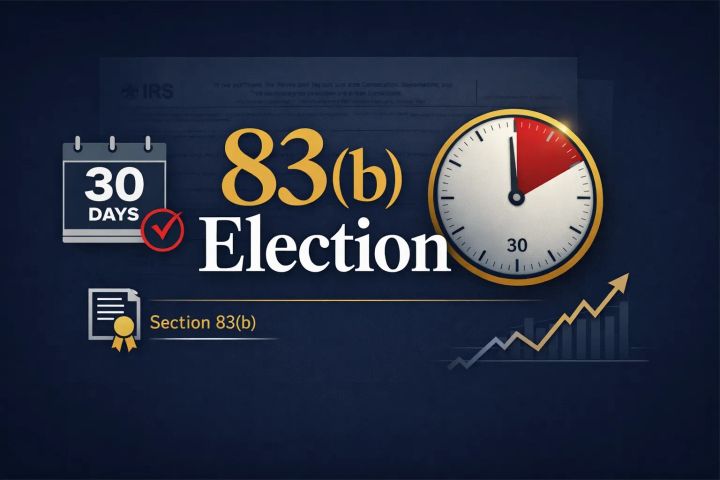
83(b) Election: What It Is, 30-Day Deadline, Form 15620 & How to File
How to file an 83(b) election online or by mail, confirm the 30-day deadline, keep proof, and evaluate restricted stock, early exercise, and QSBS.



Page 12
How to file an 83(b) election online or by mail, confirm the 30-day deadline, keep proof, and evaluate restricted stock, early exercise, and QSBS.
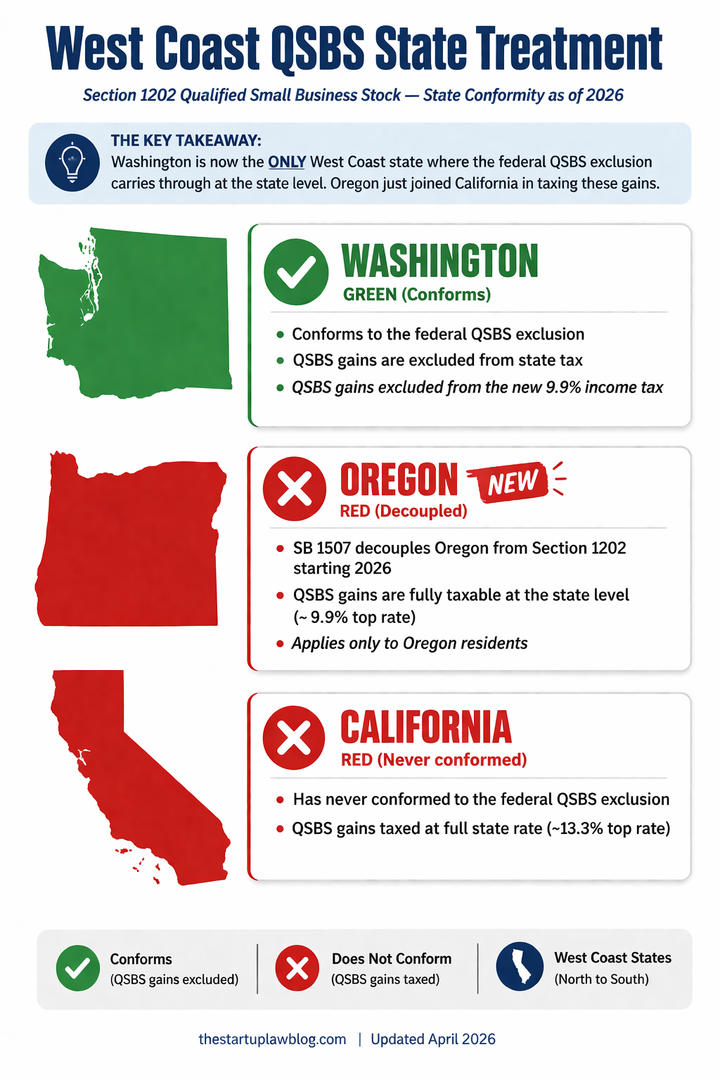
Oregon SB 1507 decouples the state from the federal QSBS exclusion under Section 1202. For tax years beginning on or after January 1, 2026, Oregon adds federally excluded QSBS gain back, so Oregon residents may owe full state income tax on it.
Governor Ferguson signed ESHB 1155 on March 23, 2026. The broader noncompete ban begins June 30, 2027; until then the 2019 income-threshold and garden-leave framework remains in effect. Here’s what changed and what you must do.
Washington's 30-day safe harbor only helps if you're already domiciled here. This explains the domicile vs residency tests, what the 30-day rule does and doesn't save you from on both income tax and capital gains, and the planning traps as the 9.9% rate starts on Jan. 1, 2028.
Washington’s official revenue estimate for the new 9.9% income tax assumes affected taxpayers do not reduce taxable income in response. That does not make the forecast wrong—but it is an assumption readers should understand.
Washington tax planning for founders: QSBS, exit proceeds, capital gains credits, equity compensation, pass-through income and residency.
Washington’s enacted 9.9% income tax begins January 1, 2028. How §404 duty-day apportionment, the §315 prorated deduction, team reporting, and NIL sourcing work for athletes under ESSB 6346.
A federal QSBS exclusion does not settle state tax. This guide covers all 50 states and D.C. for 2026 — conformity, older Code dates, addbacks, and no-income-tax states. Reviewed Sept. 21, 2026.
January is prime time for compliance slip-ups that quietly turn into bigger problems later—loss of good standing, IRS penalties, or unpleasant surprises during fundraising.
A note-funded exercise starts a stock holding period only if the tax rules treat stock as acquired. Financing, beneficial ownership, vesting, and 83(b) elections require separate analysis.