Charitable Giving Strategies to Reduce Your Washington Income Tax
Washington’s charitable deduction has a $100,000 cap shared by couples. DAF deductions, CRT distributions and QCD exclusions work differently; model both state taxes.



Washington’s charitable deduction has a $100,000 cap shared by couples. DAF deductions, CRT distributions and QCD exclusions work differently; model both state taxes.
Washington’s 2028 income tax can reach taxable retirement distributions and Social Security. Learn how basis, Roth withdrawals, other income, and residency affect the calculation.
If you own an S corp, LLC, or partnership, Washington's new 9.9% income tax hits your pass-through income differently than W-2 wages. Here's how it works and what planning options exist.
Washington's new 9.9% income tax raises hard questions for remote workers who split time between states. Residency, source rules, and duty-day allocations all matter — here's how.
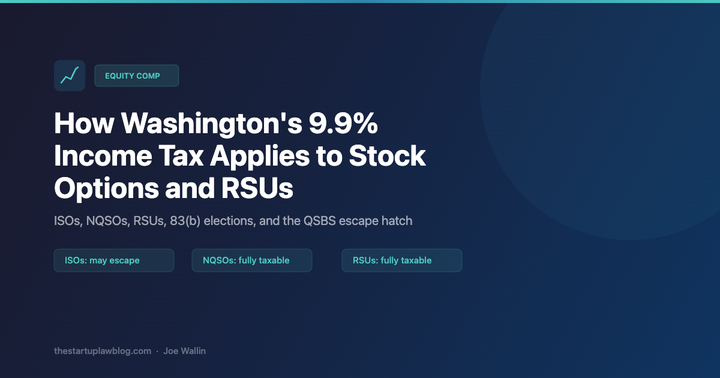
ISOs, NQSOs, RSUs, and restricted stock each interact differently with Washington's new 9.9% income tax. Here's what changes in 2028 — and what you can do before then.
Short answer: no — long-term gains from the sale of real property are excluded from Washington’s 9.9% income tax under ESSB 6346, but classification questions can get complicated fast.
How Section 1202 exclusions interact with Washington’s income and capital gains taxes, including partial exclusions, the add-back and the tax credit.
QSBS gifts and trusts: eligible-gain limits, ownership, spousal issues, assignment of income and a worked family example.
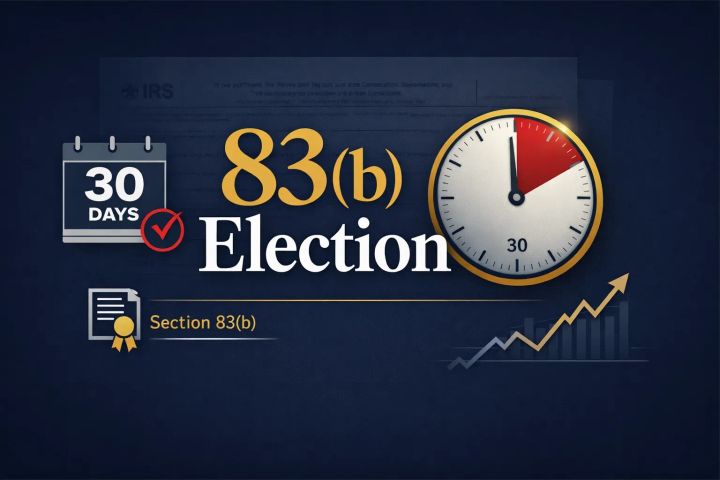
How to file an 83(b) election online or by mail, confirm the 30-day deadline, keep proof, and evaluate restricted stock, early exercise, and QSBS.
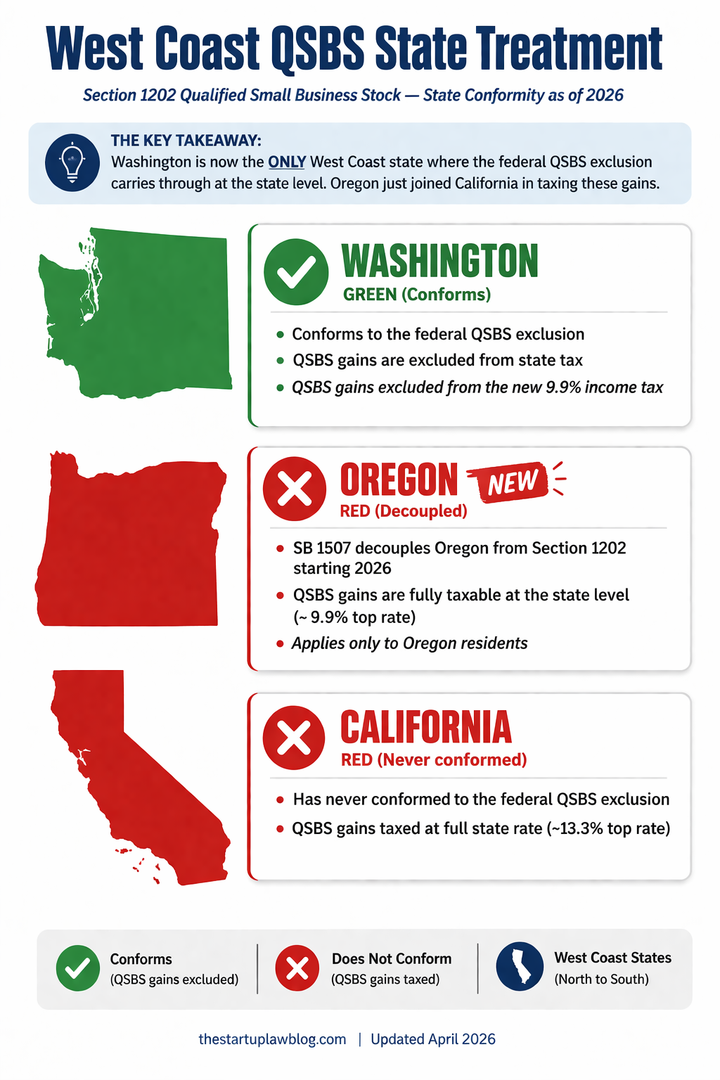
Oregon SB 1507 decouples the state from the federal QSBS exclusion under Section 1202. For tax years beginning on or after January 1, 2026, Oregon adds federally excluded QSBS gain back, so Oregon residents may owe full state income tax on it.