Rule 506(b) vs. 506(c): A Practical Guide for Startup Founders
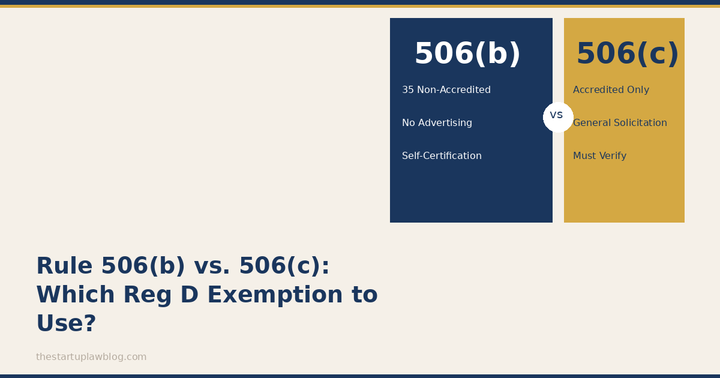
Rule 506(b) and 506(c) are the two Reg D exemptions that power almost all startup fundraising. Here's how they differ, when to use each, and the mistakes that get founders into trouble.
Accredited investor requirements for startups: income test $200k/$300k, net worth $1M (excluding your home), and SEC-approved credentials. Includes verification steps under Reg D (506(b)/(c)).
A practical comparison of the two most important Reg D exemptions — Rule 506(b) and 506(c). When to use each, how investor verification works, and how to avoid costly mistakes.
A comprehensive guide to Regulation D — the securities law framework that makes startup fundraising possible. Covers Rules 504, 506(b), and 506(c), accredited investor requirements, Form D, and common pitfalls.
If you are a non-public company granting stock options or other compensatory equity awards, you need to be familiar with Rule 701 Math and in particular its mathematical limitations.