Treasury’s 2026 QSBS Stacking Warning: What the Report Means
What Treasury’s reported QSBS stacking scrutiny establishes—and why trust ownership, existing rules and effective dates require separate review.



Page 2
What Treasury’s reported QSBS stacking scrutiny establishes—and why trust ownership, existing rules and effective dates require separate review.
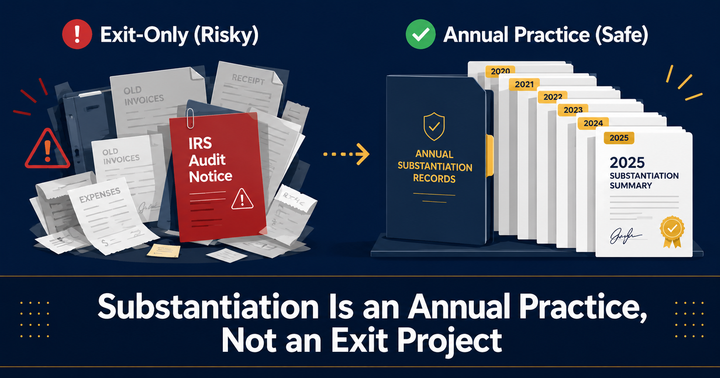
Most founders treat §1202 substantiation as something their lawyer does at exit. By then, the easy substantiation is gone. Here's why it should be an annual practice — and exactly what to do this week.
Washington State capital gains tax: who pays, the 7% and 9.9% rates after deductions, exempt assets, filing rules, and planning before a sale.
A section-by-section breakdown of what your QSBS attestation letter needs to say — gross assets, active business, redemption reps, and what happens if you can't prove it.
Step-by-step QSBS eligibility checklist: the key Section 1202 requirements your company and stock must meet to qualify for the federal capital gains exclusion.
Coordinate QSBS eligibility, Washington’s 7%–9.9% capital-gains tax, and income-tax residency and sourcing rules before a sale or move.
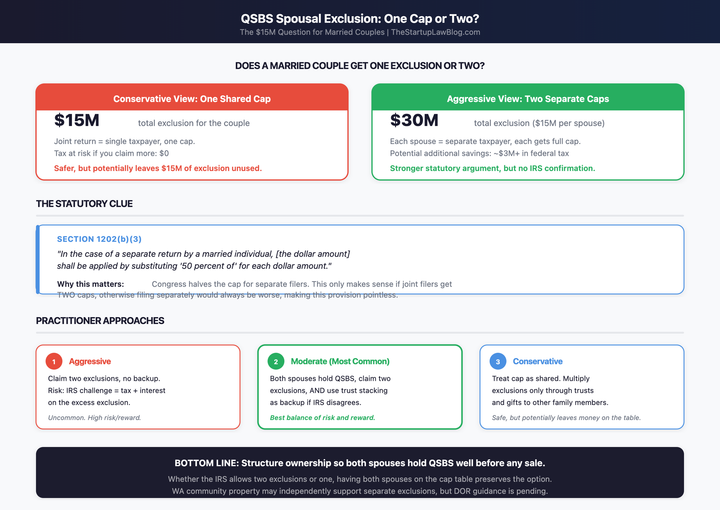
QSBS for married couples: joint versus separate returns, coordinated dollar limits, the 10-times-basis alternative, and why gifts do not establish two full exclusions.
QSBS gifts and trusts: eligible-gain limits, ownership, spousal issues, assignment of income and a worked family example.
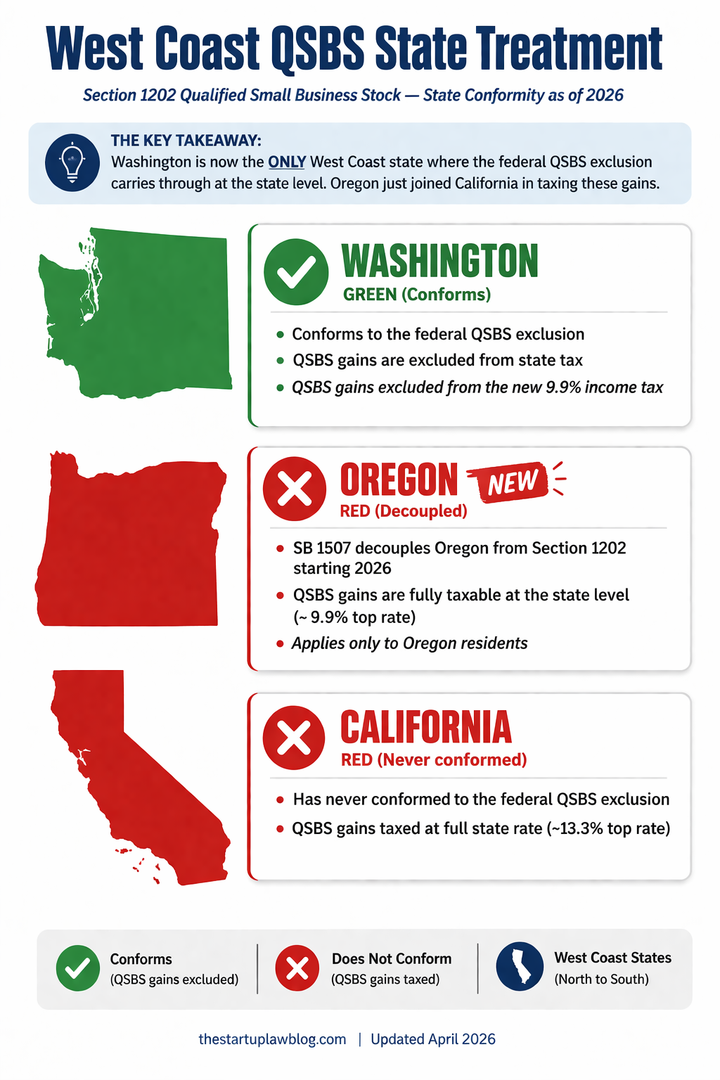
Oregon SB 1507 decouples the state from the federal QSBS exclusion under Section 1202. For tax years beginning on or after January 1, 2026, Oregon adds federally excluded QSBS gain back, so Oregon residents may owe full state income tax on it.
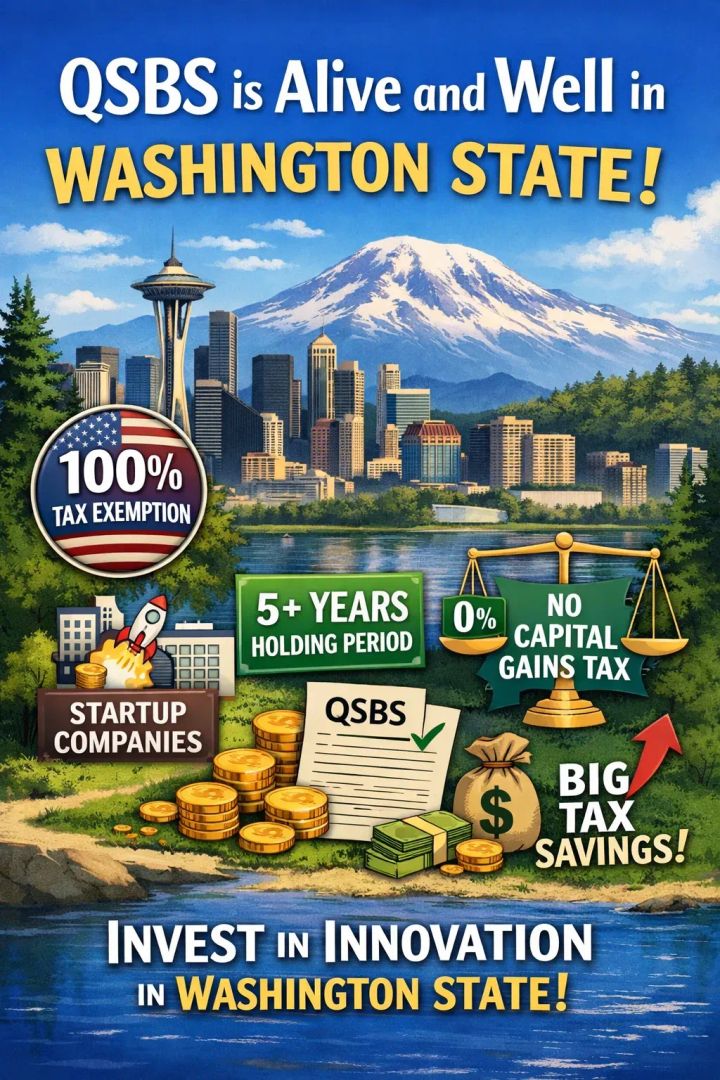
Despite Washington's new 9.9% income tax, gain actually excluded under Section 1202 remains outside Washington's capital gains tax today. Here's why Section 1202 still works in Washington.